It’s a familiar DIY renovation scene for homes built before 1990: you have your sledgehammer ready, the bathroom tiles are already coming off, but you stop. Grey cement sheeting is everywhere, and now you’re stuck. “Am I dealing with regular fibro or is this asbestos?”
As they say, when in doubt, don’t. Don’t drill, break, or disturb potentially dangerous materials such as asbestos. This material is extremely fibrous, with tiny fibres that can be easily inhaled and become trapped in the lungs. Exposure to asbestos increases your risk of developing cancers [1]. To ensure your and your family’s safety, have the material tested before proceeding with your renovation.
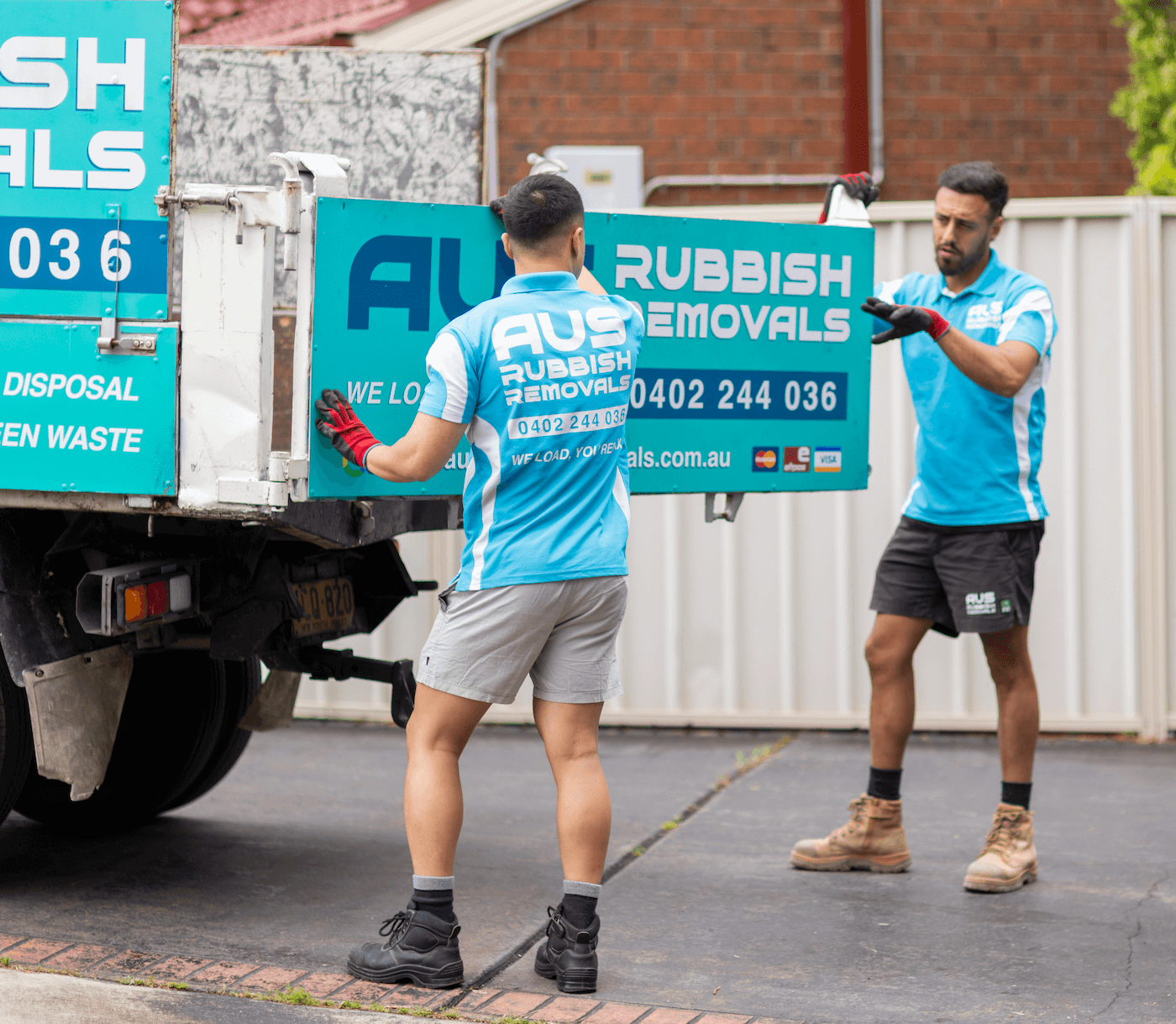
Aus Rubbish Removals is a leading Sydney junk removalist in safe fibreglass and insulation removal. The most common, and potentially dangerous, mistake that we see DIYers make is assuming old grey sheeting is harmless fibro.
It’s always a smart move to test materials, especially if you have a decades-old home. And for all non-hazardous materials, our team can haul them the same day, clearing your space for the next stage of your renovation project.
The Golden Rule: The “Pre-1990” Timeline
Asbestos was once widely used in Australian building materials until the late 1980s, but was completely banned nationwide by the end of 2003.
Examples of building and construction materials that were manufactured using asbestos were:
- Flat or corrugated sheeting
- Cement pipes
- Insulation
- Floor tiles and their adhesives
- Roofing
- Textured paints
- Textiles
Gaskets and friction parts were the last asbestos-containing products made in Australia up until 2003 [1].
Therefore, if your home was built or renovated before 1990, it likely contains asbestos. Homes built between 1990 and 2003 may still contain asbestos; therefore, it is critical that you have materials checked before handling them.
2 Groups of Asbestos-Containing Materials
- Bonded asbestos – is made up of a bonding agent, such as cement, with the asbestos fibres added. These materials contain less than 15% asbestos, and the dangerous fibres do not release unless they are damaged, disturbed, or deteriorated over time [1].
- Friable or loosely bound asbestos – these materials can be reduced or crumbled by hand, making them the most dangerous as free fibres are quickly released in the air. Bonded asbestos becomes friable once severely damaged by fire or crusted [1].
Asbestos is dangerous, and its effects often develop decades after exposure, so have building materials tested first. Your family, workers, and pets’ health must always be a priority before anything else.
Where Does Asbestos Hide in Sydney Homes?
Asbestos was once a common building material. It was found almost everywhere in a typical Sydney home.
Wet Areas (Bathrooms, Kitchens & Laundries)
Asbestos has remarkable water-resistant properties, making it the material of choice for most wet areas in a home, such as bathrooms, laundry rooms, and kitchens. It is frequently found behind old tiles, under the sink, under vinyl sheet flooring, behind shower stalls and bath panels, in backing boards for electrical meter boxes, and around pipe insulation and lagging.
Exterior Cladding & Eaves
The classic “fibro shack” older homes from the mid-1900s were built using fibrous cement sheeting, often containing asbestos. You can spot these homes by a few telltale signs: flat, slightly textured wall panels arranged in a grid-like pattern, visible cover strips where the sheets meet, and thinner walls than in modern brick or concrete homes. Asbestos can be found in the exterior walls, the undersides of eaves (soffits), and the carports of these classic homes.
Roofing & Fencing
Corrugated “Super Six” roofing profiles are a specific type of asbestos-cement roofing sheet widely used on homes, sheds, fences, and garages from the mid-1900s. The name Super Six comes from six deep, rounded corrugations across each sheet. These were strong and resistant to the elements, but their asbestos content is extremely hazardous.
Electrical Meter Boards
Asbestos is fire-resistant, which made it the best choice for backing boards behind ceramic fuses. Old homes built or renovated before 1990 have these grey backing boards, which were typically made from asbestos-cement or asbestos-insulating board (AIB). These are found in garages, utility rooms, or external meter boxes, mostly already brittle with age. These may also be present behind updated panels if the original backing was never removed.
Fibro vs. Asbestos: Can You Actually Tell by Eye?
It’s not enough to just take the “look at it and know” guarantee of a contractor. You need an expert to determine whether a material is fibrous or asbestos-containing. You can’t tell the difference by eye!
Don’t Take The Risk!
Modern fibre cement (fibro) is made using cellulose, while old fibro is made with asbestos. But once these materials have been painted or aged, it can be challenging to tell them apart.
Fibro, or fibrous cement, sheeting is flat and lightly textured, with a cement-like matte finish. These are mostly grey or off-white, or painted, and installed in large sheets with visible joints or cover strips. Fibro is used for walls, ceilings, eaves, and external cladding. Meanwhile, modern fibro is smoother and more uniform in appearance. These come with a label or document indicating that they are non-asbestos.
On the other hand, asbestos-containing materials may look almost identical to standard fibro but are more brittle, weathered, or flaky. The edges easily crumble or chip away when damaged [2], with some sheets having a “dimpled” or “golf ball” pattern on the unpainted back side.
The bottom line is that you can’t confirm whether a material is fibrous or asbestos just by looking at it. You need to send a sample to a NATA-accredited laboratory for testing.
Why Aus Rubbish Removals STRICTLY Does Not Take Asbestos
We offer non-hazardous building waste disposal services and we do not take asbestos, because we prioritise the health and safety of our team, customers, and the community. If we suspect waste contains asbestos, we will halt the job.
What You Must Do
Once your test comes back positive for asbestos, contact a licensed asbestos inspector to confirm the material and to ensure professional removal. Transporting asbestos requires specialised EPA tracking, sealed hazardous waste vehicles, and specific landfill licensing. So let the professionals handle asbestos; never DIY it.
What to Do If You Suspect Asbestos
Use this actionable checklist to safely deal with possible asbestos in your home:
1. Stop Work Immediately
Stop working on the area immediately. Never drill, sand, cut, or snap the board, as friable dust can be inhaled immediately.
2. Isolate the Area
Clear the area of people and pets. Close doors and windows, and never allow anyone to use the area until testing confirms it is safe.
3. Get it Tested
You may use DIY testing kits, which are readily available online from Airsafe, Global Asbestos Audits, Amazon, or eBay Australia. In some areas, local councils offer subsidised kits to residents. You may also hire an occupational hygienist to do the testing for you.
4. Hire a Pro
If the test comes back positive, hire a Class A or Class B-licensed asbestos removalist in NSW. They have the proper equipment, PPE, and vehicles ready to collect asbestos materials from your home and transport them to specialised facilities for safe disposal.
Frequently Asked Questions
Is it illegal to remove asbestos myself in NSW?
In NSW, an unlicensed homeowner can legally remove up to 10 square metres of bonded asbestos [3]. But it is highly discouraged due to severe health risks and strict disposal regulations. Anything over 10sqm or friable asbestos must be left to licensed professionals.
Will the council take old fibro for kerbside collections?
No. Almost all Sydney councils reject fibrous cement sheeting in kerbside collections because they cannot verify whether it’s modern fibro or asbestos.
What building waste can Aus Rubbish Removals take?
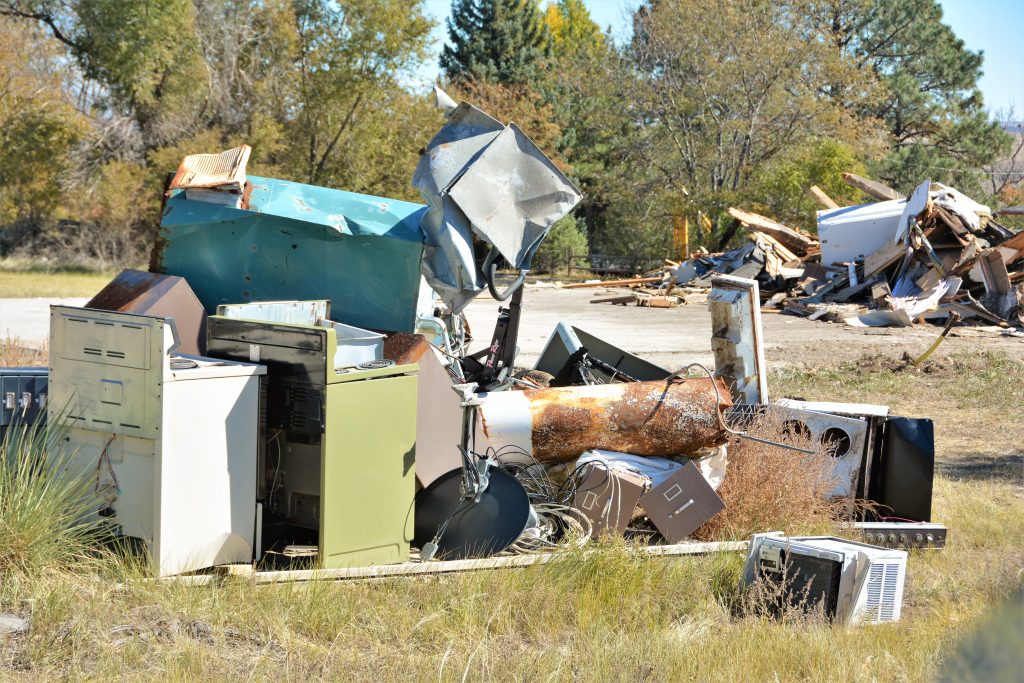
We collect all non-hazardous construction waste, such as clean time, modern Gyprock/plasterboard, scrap metal, tiles, bricks, and modern fibreglass insulation.
Call Us for the Safe Stuff
If you spot possible asbestos material during a renovation, stop all activities, clear the area, and test it first. Do not risk your and your family’s health over a renovation.
Safety always comes first. Once you’ve had any hazardous materials professionally cleared, you’ll still be left with a massive pile of timber, tiles, and modern plasterboard. That’s where we step in. Book your safe rubbish clearance fast.
References
[1] Cancer Council Australia – Asbestos
[2] NSW Government – Asbestos in NSW
[3] NSW Government – Unlicensed removal (less than 10sqm non-friable asbestos)